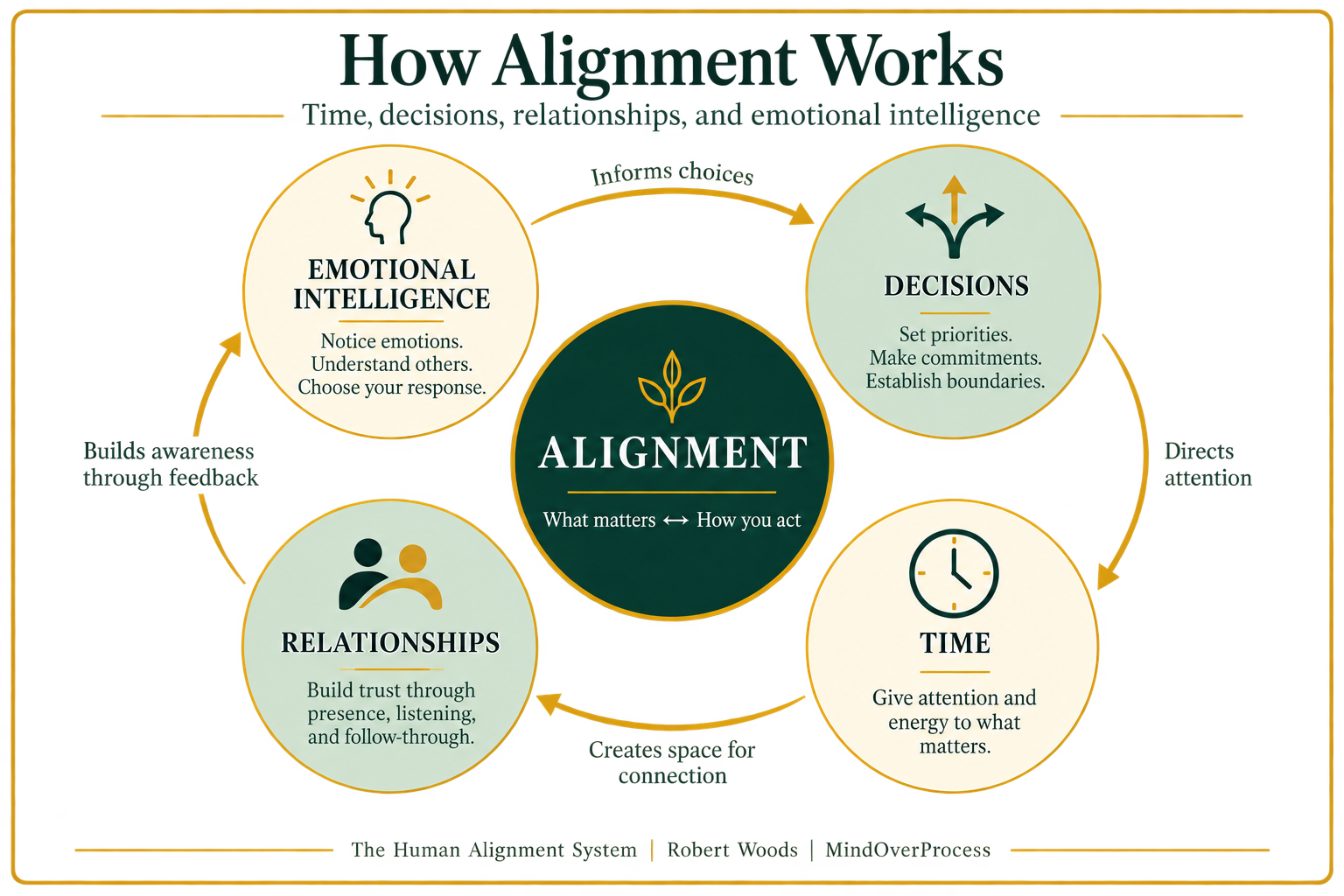
01 · Emotional intelligence
Make pressure discussable.
Notice how urgency, defensiveness, and competing interests affect the conversation. Invite disagreement and listen before responding.
Ask: “What concern or assumption is influencing my position?”
Team practice: Each leader names a concern; another summarizes it before the team discusses a response.
02 · Decisions
Turn agreement into choices.
Define shared outcomes, decision authority, and the trade-offs required to deliver. Record how exceptions will be handled.
Ask: “Who decides, using which criteria, and what will we stop or defer?”
Team practice: Keep a decision log with an owner, rationale, deadline, and review point.
03 · Time
Give priorities real capacity.
Compare strategic commitments with calendars, meeting agendas, and available people. Account for mandatory work and existing constraints.
Ask: “Where will the time come from, and what must move?”
Team practice: Protect capacity for the priority and explicitly renegotiate conflicting commitments.
04 · Relationships
Build trust across functions.
Address disagreements directly, clarify handoffs, and communicate decisions consistently. Make it safe to flag a commitment at risk.
Ask: “What do you need from my function to keep our shared commitment?”
Team practice: Agree on handoff owners, escalation timing, and how to repair missed commitments.